I've had to be on call with my work quite a bit recently...
Being on call doesn't really suit my temperament. I'm not a naturally "spontaneous" person. I dislike disruption. I prefer getting up in the morning and basically knowing what I'm doing that day - so a relatively big thing such as not knowing if I might work all day (or all evening/night, more typically) tends to trigger a strong sense of frustration...
I think it mostly comes down to a sense of not having control. But of course, when I think about it, I know that it's not really the lack of control itself which is the problem - the problem is with the desire to have that control. Attachment. Letting go of that desire, and just going with the flow, would make things much easier....
So today I decided to do just that. Did some basic house chores, a bit of reading, and then headed out for a very long photo walk - in the general direction of work. And right up until 6pm - which is the cutoff until I could theoretically be called in - I was ready to be called in.
It ended up being a pretty epic walk - from 4pm to almost 7pm. A big circle up St Kilda Road, along Southbank and South Wharf, and back home through South Melbourne. Those who know Melbourne know that this doesn't quite need to take three hours - but I spent a lot of time faffing around with my photography.
As for the photography itself - I was mostly just taking things in, not on any particular mission. Must say though - I'm quite impressed with the hand held capabilities of my EM5! Even at as low a shutter speed as 1/5 of a second, quite a few of the night shots turned out pretty clear.
At the end of the day, I didn't get called in to work, and that's totally fine. I get to have a quiet evening in instead!
Showing posts with label philosophy. Show all posts
Tuesday, August 2, 2016
On Call Photo Walk
Labels:
buddhism,
philosophy,
photography,
psychology
Location:
Melbourne, Victoria, Australia
Thursday, December 31, 2015
Goodbye 2015
I haven't made any New Year's Resolutions for the past couple of years, and I'm not at all inspired to do so this year either. After all - years are just arbitrary numbers on a calendar - and the cycles are not always in tune with good timeframes for planning to achieve stuff, etc.
Still, there are plenty of both natural as well as societal things that come in yearly cycles, and - arbitrary calendar or not - around this time I like to reflect a bit on what happened over the previous year. As well as look at what's coming up in the New Year.
2015 was a pretty good year to me. There was quite a lot of awesome travel, lovely new friendships/connections in my social/"dating" life, and work has been relatively good and flexible around it all. I've been slightly underemployed at times, and we'll see what early 2016 brings in that regard, but for the moment I think it should be fine. I'm quite loving my whole work to live lifestyle, and am not tempted to make an attempt at getting back into a proper fulltime "career" just now, but who knows what the longer term future might bring....
The biggest change that is definitely coming for me in 2016 is that I'll be moving into my parents' apartment to house sit - from February until late in the year sometime. They are going on a massive trip around the world, and the overall situation involved just doesn't lend itself to leasing the place out. This should work pretty well, since my costs will be lower while I'll still get to live on my own, as well as still be based quite centrally, and in quite a nice apartment.
Other than this, there are no other huge plans just yet. There'll definitely be some local travel adventures, and possibly a bigger overseas one if things time well with when my parents are overseas in an interesting place where I can crash with them, but that possibility is still extremely vague.
So anyway, not much to say here, just another rambling end of year reflection post!
Happy 2016 to everyone!!
![]() |
| January - Grand Canyon, USA |
![]() |
| February - Lunar New Year at Crown |
![]() |
| March - Flinders Island |
![]() |
| April - Fitzroy Street Art |
![]() |
| May - Last Light at Birrarung Marr |
![]() |
| June - Melbourne Street Art |
![]() |
| July - Sunset in St Kilda |
![]() |
| August - Last Light at Treasury Gardens |
![]() |
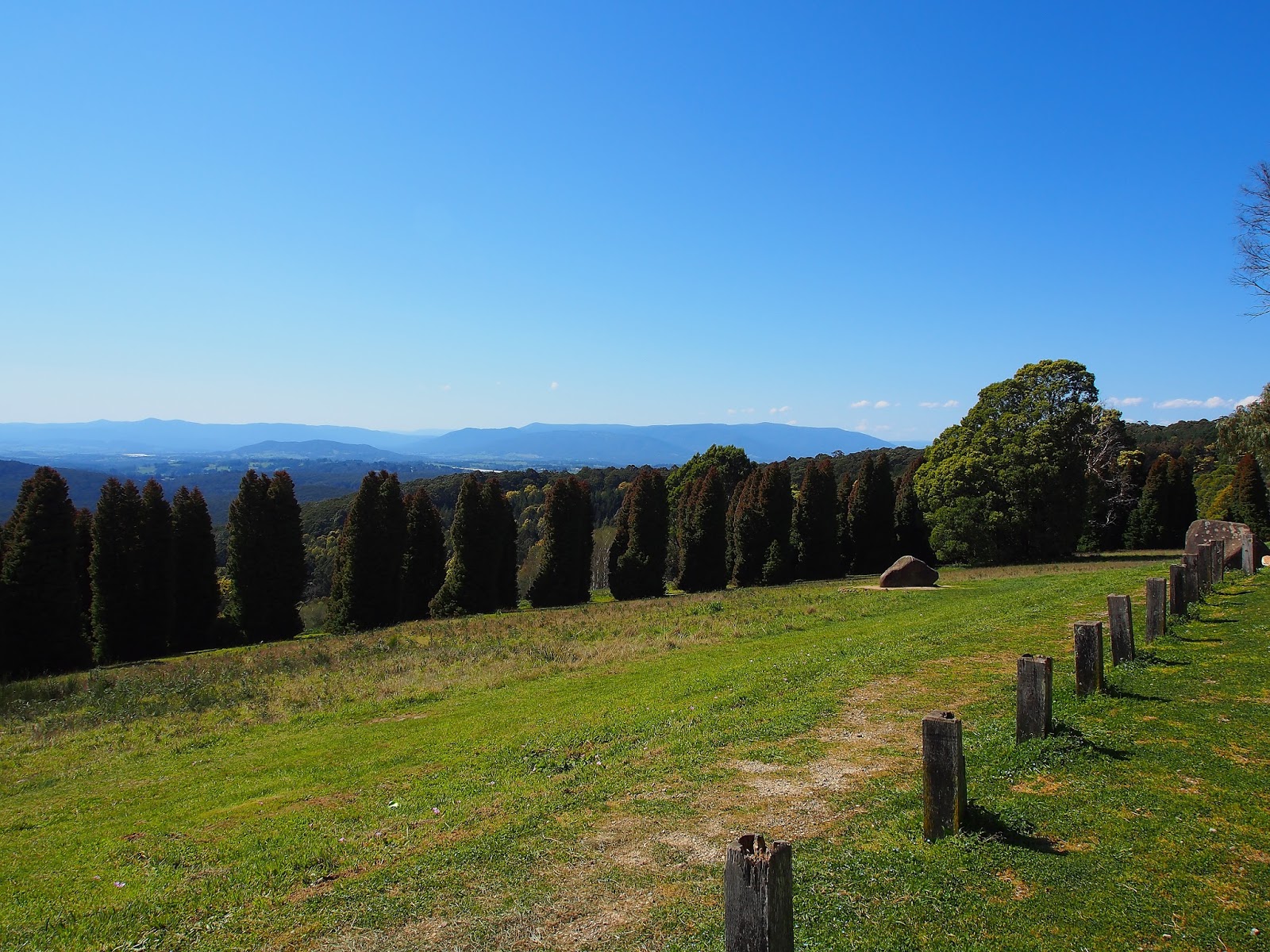
| September - RJ Hamer Arboretum |
![]() |
| October - Evening on Swanston Street |
![]() |
| November - Toora Wind Farm |
![]() |
| December - Sunset Light over Melbourne |
Labels:
career,
philosophy,
photography,
relationships
Location:
Melbourne, Australia
Sunday, October 19, 2014
The Grass is Greener in the Evening
It's funny how people get used to things. When I started my kitchen stewarding job last year, I wrote about being on the "inverted routine", and how it's sort of luxurious to be able to wake up whenever you feel like for work instead of forcing yourself up early in the mornings, etc etc.
Now, after a year of nothing else but evening/night shifts, the opposite actually feels luxurious! It actually feels exotic and privileged to me to be able to come home from work and have a relaxing evening off! And on the flipside, the few hours of free time that I have at the moment before work during the afternoons feel a bit pointless.
No matter how aware I am that this is just hedonic adaptation at work, it's still hard not to feel this way - that all these people working during the day and having evenings off are having an easy and relaxing time of it. And I should know better: I've spent 10 years working as a 9-5 office drone, as well as had past jobs which included very early rises, on "factory hours" such as 7-3.
Still, I've taken steps to try to get off night shift, at least for a couple of days per week. It's hard to organise an ongoing fixed roster which is anything like "normal" daytime business hours in hospitality, but at least this coming week I've got a couple of day shifts. And if they work out, they might become a permanent thing for a couple of months. There'll still be evening/night shifts on the weekend, but only daytime during the week.
This will be the ultimate test I suppose: having some of each in the same weekly routine. I'd like to think that being on day shift will be a huge relief, and feel very easy and relaxed to be on - mainly due to these exotic, rare and precious things called "free evenings"! But I'm pretty sure that it'll soon feel "normal", and like nothing special. And that I'll see the disadvantages of it as well as the advantages very quickly.
Now, after a year of nothing else but evening/night shifts, the opposite actually feels luxurious! It actually feels exotic and privileged to me to be able to come home from work and have a relaxing evening off! And on the flipside, the few hours of free time that I have at the moment before work during the afternoons feel a bit pointless.
Still, I've taken steps to try to get off night shift, at least for a couple of days per week. It's hard to organise an ongoing fixed roster which is anything like "normal" daytime business hours in hospitality, but at least this coming week I've got a couple of day shifts. And if they work out, they might become a permanent thing for a couple of months. There'll still be evening/night shifts on the weekend, but only daytime during the week.
This will be the ultimate test I suppose: having some of each in the same weekly routine. I'd like to think that being on day shift will be a huge relief, and feel very easy and relaxed to be on - mainly due to these exotic, rare and precious things called "free evenings"! But I'm pretty sure that it'll soon feel "normal", and like nothing special. And that I'll see the disadvantages of it as well as the advantages very quickly.
Labels:
philosophy,
psychology
Location:
Melbourne, Australia
Wednesday, July 23, 2014
Still At War With Labels
I'm still at war with the "demisexual" label. Scratch that - I've basically dropped it. I just changed the wording on my About page here to say "grey-asexual", because it's probably more accurate for me - being a general umbrella term. It's more general and less prescriptive.
Not that I don't still need a solid connection to be interested in getting sexual with someone - that part is quite accurate - but the part that's starting to feel inaccurate is how there isn't really a well-defined place or progression for sex in my relationships. I used to feel that once a particular kind of connection is in place, that I would then be much like a "normal" sexual person in that relationship (whatever that is?). But really, it's more like sex is just something that happens or doesn't happen in particular relationships, if it makes sense with that particular person or not. It doesn't define the relationship.
I think relationship anarchy might have affected how I look at all of this too. I've become quite used to the idea of "customised commitments", and generally taking each relationship for what it is - free from cultural and social norms that dictate which features that general social category of relationship should contain. I think this has helped me see that sex can have a different place in different relationships (both mine and others'), and that it can be quite a subjective thing what it means to people.
Maybe it's a bit flaky and misleading to talk about being on the asexual spectrum and being a relationship anarchist in the same breath - given that one is talking about inherent internal tendencies and the other is a set of values that can be taken up voluntarily and consciously, but I think this can be the name of the game a bit when you're discussing relationships. In fact, I'd say conventional relationship norms themselves often go with tendencies and orientations which are on the thick parts of bell curves of what people want to do with their lives, so I think quite a lot of this actually goes on anyway, even in "mainstream" relationship dialogue.
Not much has ultimately changed here. I guess I just find it more accurate to identify as a broadly "asexual spectrum person" than as explicitly demisexual, for what these labels are worth anyway.
What precipitated all this? A few online discussions I've taken part in lately, which were about the merits and drawbacks of labels. My current school of thought is that labels are far more useful when they're descriptive than when they're prescriptive - and this is where this little muse (and minor label adjustment) is coming from. I might have demisexual tendencies, but a more broad "on the asexual spectrum" label fits better, and it's more descriptive and general than "demisexual".
As I always say however - I think labels should be used sparingly and on a need-to-know basis. Overuse and overidentification is what seems to give them too much of a life of their own, and often make them too prescriptive and limiting.
Labels:
asexuality,
demisexuality,
philosophy,
relationships
Location:
Melbourne, Australia
Thursday, January 30, 2014
De-cluttering, Stage 2 complete!
So I went through all my books this afternoon, and threw out probably about half of them...
Books are the one thing that I've always found hard to throw away in the past. But looking through my collection today - I realised that a lot of them are about obscure (and often outdated) stuff that I'll never want to revisit again. And much of it is too obscure to be of much general interest.
On that note: I threw them all into the paper recycling bin, instead of trying to donate them to some charity or give them away.
I kinda doubt that book charities have much use for outdated technical manuals - or books about philosophical musings on Computer Science topics. Much of the rest were recent history and current affairs type pieces, which are really your standard library material, not something to hoard.
All that remains now are books that were gifts, books that I'll possibly want to revisit again, and books that I think other people might want to borrow at some point!
Labels:
buddhism,
philosophy
Location:
Melbourne, Australia
Wednesday, January 29, 2014
De-cluttering, Stage 1 complete!
I'm going to be moving soon. My lease expires in a couple of months, and I'm going to take this chance to move to a more convenient location - closer to work and to the city.
Many years ago, basically just after first moving out of home, I got it into my head how it would be cool to have as little Stuff as possible. At the time, this thinking wasn't particularly abstract or philosophical - it just seemed like it would be good to not be tied down with too much Stuff that needs to be moved - since I was planning to have a bit of a mobile lifestyle through my 20s.
Now - there's still that (purely practical) aspect of course - but there's also the whole (more abstract and philosophical) nonattachment and "mental clutter" element.
Basically, the older I get the more I find that having "Stuff" just creates stress. There's practical stuff you need of course, but then there's Stuff that's just there. You don't use it for years, you pack it and unpack it when you move from place to place, but ultimately you never use it. It just collects dust and adds to the pain of moving.
It was mostly a pile of dusty random crap that didn't really have any value anymore - except for perhaps a kind of vague sentimental attachment. For example: the whole set of World Of Warcraft DVDs (and expansions) that I'd collected over the years. Also some random bric-a-brac that I would probably never use again.
The entire value of this Stuff was based on some notion that this Stuff is somehow part of my life, and that getting rid of it would somehow impact on who I am. As if throwing away random objects that have no practical use can possibly have a real impact on who you are.
This is not to say I'm going to be entirely heartless and unsentimental about all this of course! I'll be keeping some old books and most things that are cherished and thoughtful gifts from special people in my life. But other than that - much of what has collected dust over the past two years of living here and hasn't seen practical use is going to get purged before my move.
Lighter move, lighter head, less Stuff, less clutter...
Many years ago, basically just after first moving out of home, I got it into my head how it would be cool to have as little Stuff as possible. At the time, this thinking wasn't particularly abstract or philosophical - it just seemed like it would be good to not be tied down with too much Stuff that needs to be moved - since I was planning to have a bit of a mobile lifestyle through my 20s.
Now - there's still that (purely practical) aspect of course - but there's also the whole (more abstract and philosophical) nonattachment and "mental clutter" element.
Basically, the older I get the more I find that having "Stuff" just creates stress. There's practical stuff you need of course, but then there's Stuff that's just there. You don't use it for years, you pack it and unpack it when you move from place to place, but ultimately you never use it. It just collects dust and adds to the pain of moving.
Stage One Complete
The first lot of Stuff I got rid of was a bunch of odds and ends that I had on a shelf in my living room.It was mostly a pile of dusty random crap that didn't really have any value anymore - except for perhaps a kind of vague sentimental attachment. For example: the whole set of World Of Warcraft DVDs (and expansions) that I'd collected over the years. Also some random bric-a-brac that I would probably never use again.
The entire value of this Stuff was based on some notion that this Stuff is somehow part of my life, and that getting rid of it would somehow impact on who I am. As if throwing away random objects that have no practical use can possibly have a real impact on who you are.
This is not to say I'm going to be entirely heartless and unsentimental about all this of course! I'll be keeping some old books and most things that are cherished and thoughtful gifts from special people in my life. But other than that - much of what has collected dust over the past two years of living here and hasn't seen practical use is going to get purged before my move.
Lighter move, lighter head, less Stuff, less clutter...
Labels:
buddhism,
philosophy
Location:
Melbourne, Australia
Monday, January 20, 2014
Relationship Anarchy Revisited Again
It's been a while since I've blogged about this topic - which is a bit odd perhaps - considering that I've actually been involved in my first RA-based relationship in real life for the past few months! It started in October 2013 with a woman I met on OkCupid (let's call her "T"), and has been going awesomely well from day one and ever since!
I suppose the reason why I've had nothing particular to say is exactly this - the fact that it's been going very well! Theory and practice coming together in such a seamless way that there's been nothing much to say except - "Yes! This is working great! Just as expected based on theoretical RA precepts, and experience with Internet-based long distance relationships."
This relationship is totally stress-free and drama-free, and I think the main reason for that is that there are no expectations of it being anything "more" than it actually is. I'm convinced that this is where almost all relationship drama ultimately comes from - people having mismatched expectations of some sort - and then hanging obligations and demands on each other which are aimed at fulfilling those expectations. But when you keep these to a minimum and just go with the flow of what's actually working well between the two of you - it works well with minimal "work".
That said, it certainly helps that both T and myself are extremely independent people. Neither of us is keen on typical relationship "progression", in traditional relationship escalator type terms. Or finding a traditional "life partner" and "settling down".
Oddly enough, certain details of what's been happening lately actually mimic some of that relationship progression behaviour (eg. Staying over and cooking together, having our first weekend away together last weekend, etc) - but there's still no stress. And again, it all comes down to having no particular expectations. These things don't "mean" anything that measures up against some external notion of where the relationship is "going". It just is what it is. Everything is measured relative only to itself.
You can probably see now why I've had nothing particular to say about all this ever since it started. It's just been exactly what it's been, and it's been great! I suppose the only generalised lesson is that Relationship Anarchy WORKS! And it works very well.
Labels:
asexuality,
demisexuality,
philosophy,
psychology,
relationships
Location:
Melbourne, Australia
Tuesday, December 3, 2013
Harder to Think than to Do
I've had some rather rough shifts at work lately, finishing well after 2am in the morning, that sort of thing...
Just today I was reminded of something I read once about Ajahn Brahm. I think the story was that he was a young monk in Thailand, pushing a wheelbarrow while building a monastery. He complained to another monk how hard it was to push a heavy wheelbarrow, and the monk replied: "Pushing the wheelbarrow is easy, thinking about it is hard."
It's amazing how true this actually is. Especially when it comes to mindless manual work where there really is almost nothing to truly get "stuck on" mentally. This concept probably goes a long way to explain why I ultimately find the stresses of manual labouring type work much easier to tolerate than the stresses of "knowledge work". After all, you can't really avoid thinking about the work when the nature of the work is almost entirely mental.
Something to remember I guess. Every time one gets stressed over how "hard" a certain mindless chore or errand is going to be. It's easier to just do it than to think about doing it. ie Just go through the motions and find freedom from it on the other side.
Labels:
buddhism,
philosophy,
psychology
Location:
Melbourne, Australia
Friday, October 11, 2013
NYRs 2013 - Revisited
I was just looking over some old posts, and noticed my old New Years Resolutions post for 2013...
I totally forgot about it. And whoaaaa! A couple of those have severely "failed", but also not really - there's a context behind it. The context of "going with the flow", which I mentioned in the post itself.
The main thing which "failed" is the Lazy Evening Routine. When I initially looked over that, it looked pretty bad, but now when I think of it - relaxing in the evenings is justified, as life stands right now. I'm waking up very early and doing relatively productive things during the days, back at the end of 2012 I wasn't.
Looking back on where I was at earlier in the year, I'm certainly better at mindfully living in the moment, and going with the flow. There isn't much point stressing about not doing enough with your evenings, for its own sake. Relaxation and wind-down time are totally justified, especially when you're actually doing quite a bit of productive stuff during the day.
This is one of the pitfalls of New Years Resolutions I think. If you get too specific and overplan things, and then get very attached to those rigid plans, they just become a source of stress. And it's better to be results-oriented than routine-oriented. So for example: A goal like "get a truck license" would be a result-oriented goal, while a goal like "don't be lazy in the evenings" is too routine-oriented and subjective. And depending on how your routine evolves, it might make sense to break. Since you're not really being "lazy" if your routine evolves into something where relaxation in the evenings is justified. And besides, I'm not even being that lazy with my evenings - most of the time I do things such as catch up on emails or do some reading.
Something to think about for 2014, if I even bother with NYRs for it.
Labels:
buddhism,
philosophy,
psychology
Location:
Melbourne, Australia
Wednesday, September 4, 2013
Incoherent Pre-Election Rant
Given that I'm on a mainstream media blackout, I'm not actually reading much about the upcoming election this weekend. But of course, I still occasionally see snippets of information here and there, via Facebook and Twitter and general chats with people.
A few unrelated thoughts have been bouncing around my head lately however - just some psychological observations about people and politics - so I think I'll try to put them down in writing. Not sure this will make much sense - but what the hey.
I've been thinking quite a bit about the whole idea of ideology and identity politics. Not just in ideological political terms, but even the likes of personal relationships. But I digress...
Years and years ago, when I first read "Escape From Freedom" by Erich Fromm, it hit me how authoritarianism seems to come in cycles (eg. Feudalism -> Fascism -> Communism). And I think this snippet explains it well:
To torture the metaphor further: Yes, keep the road map, but make sure you're in a 4WD! And be ready to go offroad at times!
It's not a universal explanation of course, but I think it's common enough that in big enough systems - you'll almost always see relatively unpleasant and self-serving characters in higher positions. The reason why I often bring this up is because I believe this psychology transcends the usual political divides. It isn't really a "progressive vs conservative" issue, per se, because as noted above - when a seemingly "progressive" authoritarian system gets its way, it'll almost invariably become "conservative" - after a generation or so.
These days, I often think about the history of Yugoslavia, especially how - during the 1960s - it was often touted as a positive example of communism in the West. Some aspects were of course (at least relative to some other parts of the Eastern Bloc), but on the whole the above is basically what happened: control freaks rose to the top, there was no way to remove them - and the entire system became almost as regressive and scary as what came before it. Barring some overall global improvements in the human condition of course (which were happening universally in every semi-functional society at the time anyway).
But worst of all - society in general was high on ideology. Many people were relatively comfortable and didn't see much need for change. Even though there was plenty of evidence around that things were beginning to fester and rot. But most just treated politics as an elephant in the room, and didn't get involved in uprisings or dissent - it was simply easier and safer to remain a "faithless follower". And I saw the tail end of this personally, growing up there in the 1980s.
The events of the "Croatian Spring" were the culmination of all this I think. The very generation that smashed Fascism and modernised the country now had control freaks in higher positions who were afraid of taking the next step - and loosening the Party's grip on the country, potentially allowing it to transition towards becoming a Western European style social democracy (that extent of possibilities is possibly a pipe dream, but this bit is just a pointless revisionist rant anyway - so I'm entitled to speculate :P).
When I go to the ballot box, I suppose these days I'm just happy that there is a ballot box - and that whichever control freak ends up in power and screws things up - four years later (or less) they will probably be replaced. If we're lucky, they'll do a good job, and they might get an extra term. But on the whole - the ability to kick them out is what seems to make democracy a winner over every other system that's been tried. Which isn't unusual when you think about the psychology of hierarchies.
Meanwhile, here I am trying to work out which minor parties have the best individual policies on various things. And of course, it's impossible to find anyone who speaks for all of my views on everything consistently.
Now I just have to make sure that this lack of fixed ideology doesn't become an authoritarian ideology in itself! Both in my political views as well as personal life (but that's a topic for another rant).
A few unrelated thoughts have been bouncing around my head lately however - just some psychological observations about people and politics - so I think I'll try to put them down in writing. Not sure this will make much sense - but what the hey.
I've been thinking quite a bit about the whole idea of ideology and identity politics. Not just in ideological political terms, but even the likes of personal relationships. But I digress...
Years and years ago, when I first read "Escape From Freedom" by Erich Fromm, it hit me how authoritarianism seems to come in cycles (eg. Feudalism -> Fascism -> Communism). And I think this snippet explains it well:
"In the process of becoming emancipated from an overbearing authority/set of values, Fromm argues, we are often left with feelings of emptiness and anxiety (he likens this process to the individuation of infants in the normal course of child development) that will not abate until we use our 'freedom to' and develop some form of replacement of the old order. However, a common substitute for exercising "freedom to" or authenticity is to submit to an authoritarian system that replaces the old order with another of different external appearance but identical function for the individual: to eliminate uncertainty by prescribing what to think and how to act. "This quite neatly explains why rigid identity politics tends to bug me. Having grown up in a true authoritarian system - which ultimately crashed - coming of age I often had a sense that there really is no such thing as a "good" fixed ideological system. One that's worth setting in stone and using as a permanent road map forever. It seems like the best we can do is have some sensible general framework in place, accept change as a constant, and always leave details up for re-evaluation and tweaking. Most importantly - allow for an ongoing competition of ideas.
To torture the metaphor further: Yes, keep the road map, but make sure you're in a 4WD! And be ready to go offroad at times!
Control Freaks rise to the Top
I think pretty much every hierarchy on Earth takes the following form: Loud-mouthed control freaks and sociopaths who know how to manipulate people and get their own way rise to the top, while honest hard-working people tend to labour quietly behind the scenes.It's not a universal explanation of course, but I think it's common enough that in big enough systems - you'll almost always see relatively unpleasant and self-serving characters in higher positions. The reason why I often bring this up is because I believe this psychology transcends the usual political divides. It isn't really a "progressive vs conservative" issue, per se, because as noted above - when a seemingly "progressive" authoritarian system gets its way, it'll almost invariably become "conservative" - after a generation or so.
These days, I often think about the history of Yugoslavia, especially how - during the 1960s - it was often touted as a positive example of communism in the West. Some aspects were of course (at least relative to some other parts of the Eastern Bloc), but on the whole the above is basically what happened: control freaks rose to the top, there was no way to remove them - and the entire system became almost as regressive and scary as what came before it. Barring some overall global improvements in the human condition of course (which were happening universally in every semi-functional society at the time anyway).
But worst of all - society in general was high on ideology. Many people were relatively comfortable and didn't see much need for change. Even though there was plenty of evidence around that things were beginning to fester and rot. But most just treated politics as an elephant in the room, and didn't get involved in uprisings or dissent - it was simply easier and safer to remain a "faithless follower". And I saw the tail end of this personally, growing up there in the 1980s.
The events of the "Croatian Spring" were the culmination of all this I think. The very generation that smashed Fascism and modernised the country now had control freaks in higher positions who were afraid of taking the next step - and loosening the Party's grip on the country, potentially allowing it to transition towards becoming a Western European style social democracy (that extent of possibilities is possibly a pipe dream, but this bit is just a pointless revisionist rant anyway - so I'm entitled to speculate :P).
Ideology and Voting
I generally think of myself as progressive/left-wing, leaning towards Nordic-style democratic socialism as a theoretical ideal (for now). But on the other hand, I've got a libertarian streak too, which in some ways clashes with this. I suppose it's a mix of believing in solid foundations while giving as much freedom as possible at the same time. Not much is carved in stone though, which is what makes voting rather difficult at times.When I go to the ballot box, I suppose these days I'm just happy that there is a ballot box - and that whichever control freak ends up in power and screws things up - four years later (or less) they will probably be replaced. If we're lucky, they'll do a good job, and they might get an extra term. But on the whole - the ability to kick them out is what seems to make democracy a winner over every other system that's been tried. Which isn't unusual when you think about the psychology of hierarchies.
Meanwhile, here I am trying to work out which minor parties have the best individual policies on various things. And of course, it's impossible to find anyone who speaks for all of my views on everything consistently.
Now I just have to make sure that this lack of fixed ideology doesn't become an authoritarian ideology in itself! Both in my political views as well as personal life (but that's a topic for another rant).
Labels:
philosophy,
psychology
Location:
Melbourne, Australia
Monday, July 15, 2013
Relationship Anarchy Revisited
This post is mostly going to be some musing and expanding on what I said back in January - in the Carnival of Aces post "My Relationship Anarchy". Mostly clarification of some terminology and a re-framing of certain things.
I suppose you could say I've got a clearer image in my mind now of what the problem was with how I was explaining my version of Relationship Anarchy back in those days - mostly with how confusing it was when presented to people who roll with a relatively mainstream and conventional relationship model.
The two main things I'm going to discuss are 1) how what non-monogamy means to me is "inverted" by mainstream standards, and 2) how the word "romance" is extremely problematic when applied to what it means with me. And how I'm possibly better off not being overly concerned with classifying my relationships as romantic or non-romantic altogether, to an extent anyway.
Other forms of non-monogamy, especially the various combinations of polyamory, revolve around very different emotional commitment models, but that is the most common assumption in the popular imagination when it comes to "non-monogamy" - casual sex being allowed outside of an otherwise fairly standard committed relationship. The focus is on sex, at any rate. Usually relatively casual sex, while the core relationship is emotionally committed and otherwise might look very "normal" and mainstream.
My personal Relationship Anarchy ideals regarding "non-monogamy" practically turn this model on its head! Due to my demisexual issues, and generally being quite mindful and cautious about sex to boot - what I envisage for myself is a model which is more along the lines of the opposite: A (potential) core "primary" relationship which may be sexually exclusive, but then with openness to highly emotionally intimate friendships outside it. Intimate friendships which might never get sexual at all, even though they're highly emotionally intimate and may involve more affectionate physical contact than is usual for friendship.
So effectively - the emotional and sexual aspects of "openness" are reversed!
What's the point of this? Most "sexual" people might ask...
I think I can understand, at least intellectually, why this probably doesn't make much sense to most people. Most people can feel casual sexual attraction to random good-looking others. So the idea of casual sex is at least theoretically appealing, and might seem like a tempting "perk" of opening up their relationship in that sense, regardless of their morals and such and whether they'd actually personally ever do it or not. But probably more significantly - most people automatically associate "romantic" emotional bonding with sexuality, so it just doesn't make sense to them to have deep emotionally intimate relationships without sex. There's usually a fairly fixed sense of a relationship being firmly "romantic" versus "platonic" out there in the mainstream, and the presence of sex is pretty much a giveaway to which which type of relationship it is.
Of course, this all falls to pieces spectacularly when applied to people on the asexual spectrum. And I'll try my best to explain how it's all a horrible mess when applied to my own thinking on relationships - this annoying Romantic vs Platonic dichotomy.
This has gotten to the point where I'm starting to think that applying the term "romantic" to myself is downright misleading. When I feel those feelings, it doesn't necessarily mean that I want to make that person my "girlfriend", in the usual sense. And it definitely doesn't mean that I want to have sex with her! Not immediately, and potentially not ever. It's probably better framed along the lines of - I care about her and am drawn to emotionally bonding with her. And if she ends up being a close friend whom I can open up to and talk about anything with and be affectionate with and cuddle with - that would be a totally fulfilling form of "special friendship" in itself!
But is a special friend whom you cuddle with and can talk about anything with really a "romantic" relationship in any real sense? I don't know. When I sit back and think about it, I actually confuse myself with where that line is now. If we were living in a highly cuddly culture where it wouldn't be weird, I'm pretty sure I could be "cuddle buddies" with just about any close female friend - and I'm not sure that the feelings of love and closeness in that situation would be qualitatively very different to what I used to think "romance" was. So it's like - I could easily think of all of my close friendships with women as "romantic" to a certain degree, or else think of myself as an aromantic who simply has a highly emotionally and physically affectionate response to females.
No, I'm not going to go with the latter there. I don't think it would be honest - but it's very tempting sometimes to throw away the term "romance" altogether when applied to my views on emotionally intimate relationships. Because the way it comes with so much sexual and relationship-traditionalist baggage completely ties my mental model of emotional bonding with women up in knots. It simply isn't such a clear and simple dichotomy in my mind. And trying to conform myself to it artificially leads to more problems than it solves.
It can't really be said to be either a "proper" romantic relationship, nor "just" a friendship - but in Relationship Anarchy thinking - that doesn't matter. What matters is that people are on the same page and are connecting on a level that makes sense to them, as individuals. Regardless of how it conforms to mainstream ideas about what different "kinds" of relationships are "supposed to" look like.
And affectionate friendship is the most intuitive way to connect with me. I'd say around 90% of the time I feel affectional attraction to a girl - getting an ongoing and committed affectionate friendship out of the connection feels like it would be the most wonderful conclusion. It's not incomplete or confusing to me at all. Nor any more competitive nor exclusive than any other friendship.
Unfortunately, by "normal" standards, this is in a weird twilight zone. Not quite "just" friendship, and not really a proper "romantic relationship" either. Have something like this with someone else when you're in a conventional monogamous relationship - and you're definitely held to be "emotionally cheating" on your partner. Have it when you're single, and you're told that you're not in a "real" or "complete" relationship. Funny how that works. Still, it feels good to finally have something that makes sense to me. Something that I can actually offer up as a way of connecting that doesn't make me feel compromised and demented - the way standard "dating" does.
And as I've often said before, I strongly believe that love is love. The different "flavours" of love really don't have to dictate that a relationship has to be shoe-horned into a certain socially accepted "category". So in conclusion: affectionate friendship will be the common baseline of all my future relationships. And it's a wonderful form of ongoing relationship that can exist for its own sake, non-exclusively.
I suppose you could say I've got a clearer image in my mind now of what the problem was with how I was explaining my version of Relationship Anarchy back in those days - mostly with how confusing it was when presented to people who roll with a relatively mainstream and conventional relationship model.
The two main things I'm going to discuss are 1) how what non-monogamy means to me is "inverted" by mainstream standards, and 2) how the word "romance" is extremely problematic when applied to what it means with me. And how I'm possibly better off not being overly concerned with classifying my relationships as romantic or non-romantic altogether, to an extent anyway.
"Inverted" Non-Monogamy
This is by no means universal opinion - but for the most part - when people think non-monogamy (especially "open relationships"), the first thing that springs to mind is sexual openness. And the most common model people imagine is something like this: A committed core relationship in which the partners have agreed that they have an automatic "hall pass". In other words: the relationship is emotionally committed and probably fairly typical and conventional otherwise - other than that (usually relatively casual) sex is allowed outside of it.Other forms of non-monogamy, especially the various combinations of polyamory, revolve around very different emotional commitment models, but that is the most common assumption in the popular imagination when it comes to "non-monogamy" - casual sex being allowed outside of an otherwise fairly standard committed relationship. The focus is on sex, at any rate. Usually relatively casual sex, while the core relationship is emotionally committed and otherwise might look very "normal" and mainstream.
So effectively - the emotional and sexual aspects of "openness" are reversed!
What's the point of this? Most "sexual" people might ask...
I think I can understand, at least intellectually, why this probably doesn't make much sense to most people. Most people can feel casual sexual attraction to random good-looking others. So the idea of casual sex is at least theoretically appealing, and might seem like a tempting "perk" of opening up their relationship in that sense, regardless of their morals and such and whether they'd actually personally ever do it or not. But probably more significantly - most people automatically associate "romantic" emotional bonding with sexuality, so it just doesn't make sense to them to have deep emotionally intimate relationships without sex. There's usually a fairly fixed sense of a relationship being firmly "romantic" versus "platonic" out there in the mainstream, and the presence of sex is pretty much a giveaway to which which type of relationship it is.
Of course, this all falls to pieces spectacularly when applied to people on the asexual spectrum. And I'll try my best to explain how it's all a horrible mess when applied to my own thinking on relationships - this annoying Romantic vs Platonic dichotomy.
The Problem With "Romance"
"Romance" is essentially completely disconnected from sexuality to me. I've definitely got an affectional orientation which is hetero, since I can feel that special "spark" for females, and can only develop crushes and limerence for females. But the link between this and sexuality (as well as any particular plans for how a relationship should look - in a way that would solidly differentiate it from close friendship) is ridiculously abstract - to say the least.This has gotten to the point where I'm starting to think that applying the term "romantic" to myself is downright misleading. When I feel those feelings, it doesn't necessarily mean that I want to make that person my "girlfriend", in the usual sense. And it definitely doesn't mean that I want to have sex with her! Not immediately, and potentially not ever. It's probably better framed along the lines of - I care about her and am drawn to emotionally bonding with her. And if she ends up being a close friend whom I can open up to and talk about anything with and be affectionate with and cuddle with - that would be a totally fulfilling form of "special friendship" in itself!
But is a special friend whom you cuddle with and can talk about anything with really a "romantic" relationship in any real sense? I don't know. When I sit back and think about it, I actually confuse myself with where that line is now. If we were living in a highly cuddly culture where it wouldn't be weird, I'm pretty sure I could be "cuddle buddies" with just about any close female friend - and I'm not sure that the feelings of love and closeness in that situation would be qualitatively very different to what I used to think "romance" was. So it's like - I could easily think of all of my close friendships with women as "romantic" to a certain degree, or else think of myself as an aromantic who simply has a highly emotionally and physically affectionate response to females.
No, I'm not going to go with the latter there. I don't think it would be honest - but it's very tempting sometimes to throw away the term "romance" altogether when applied to my views on emotionally intimate relationships. Because the way it comes with so much sexual and relationship-traditionalist baggage completely ties my mental model of emotional bonding with women up in knots. It simply isn't such a clear and simple dichotomy in my mind. And trying to conform myself to it artificially leads to more problems than it solves.
Affectionate Friendship
My latest "thing" is something I call affectionate friendship. This isn't a term I invented of course, but I've come to the conclusion that this is the most intuitive way of connecting with me.It can't really be said to be either a "proper" romantic relationship, nor "just" a friendship - but in Relationship Anarchy thinking - that doesn't matter. What matters is that people are on the same page and are connecting on a level that makes sense to them, as individuals. Regardless of how it conforms to mainstream ideas about what different "kinds" of relationships are "supposed to" look like.
And affectionate friendship is the most intuitive way to connect with me. I'd say around 90% of the time I feel affectional attraction to a girl - getting an ongoing and committed affectionate friendship out of the connection feels like it would be the most wonderful conclusion. It's not incomplete or confusing to me at all. Nor any more competitive nor exclusive than any other friendship.
Unfortunately, by "normal" standards, this is in a weird twilight zone. Not quite "just" friendship, and not really a proper "romantic relationship" either. Have something like this with someone else when you're in a conventional monogamous relationship - and you're definitely held to be "emotionally cheating" on your partner. Have it when you're single, and you're told that you're not in a "real" or "complete" relationship. Funny how that works. Still, it feels good to finally have something that makes sense to me. Something that I can actually offer up as a way of connecting that doesn't make me feel compromised and demented - the way standard "dating" does.
And as I've often said before, I strongly believe that love is love. The different "flavours" of love really don't have to dictate that a relationship has to be shoe-horned into a certain socially accepted "category". So in conclusion: affectionate friendship will be the common baseline of all my future relationships. And it's a wonderful form of ongoing relationship that can exist for its own sake, non-exclusively.
Labels:
asexuality,
demisexuality,
philosophy,
psychology,
relationships
Location:
Melbourne, Australia
Thursday, April 4, 2013
Career Epiphany
So I've had a bit of a "reverse brainfart" over all my career-related issues ...
Last Thursday evening, I was out getting a casual dinner at a little diner on Chapel Street, and saw some office workers walking around on their way home from work. Suddenly I was reminded of the days when I was one of them - and how in context it doesn't have to be so bad.
Initially I felt like a total tool. Like these last two years and three months have been all for nothing. But then it quickly hit me that it's not the case at all - it was all part of a journey. The realisations could never have happened in the state I was in back in late 2010. If I had tried to face it down - I simply would have ended up stewing more and more, potentially going nuts in the process.
I think a lot of it comes down to accepting a situation you're in emotionally, rather than purely intellectually. ie It's easy enough to intellectually understand that a "job is just a job" for example - and not take it personally when it's not a little slice of heaven every day. But if you don't emotionally grasp that, you can slowly dig yourself into a hole which leads to burnout. I can see that now, and know when to fold in future. Though I suspect that now I'd do a lot better - and last a lot longer and be more productive - even in jobs which I find incredibly mind-numbing.
So where to now? - I'm not 100% sure yet. I've re-done my CV. Created three versions of it for different types of jobs in fact. But mostly I'll be looking in an IT specialisation which I haven't directly worked in before (although I'd been in that kind of role informally at times - as part of jobs which were officially something else).
I'm not expecting to get something in a hurry. I've got a career gap on my CV now which will probably take some serious selling. But we'll see how it goes.
Labels:
career,
philosophy,
psychology
Location:
Melbourne, Australia
Thursday, March 7, 2013
The Paradox of Choice
I just finished reading Barry Schwartz's "The Paradox of Choice: Why More Is Less".
There are a lot of things in here which overlap quite a bit with certain ideas about materialism and simple living which I've already had in place for a while. Either from socialistic aspects of my upbringing, Buddhism, or general study of philosophy.
From my interpretation - much of the problem with too much choice comes down to the "hedonic treadmill", and how even though this is something nearly everyone can understand in theory, it's very hard to fully grasp and put into practice - learning to stop these mind habits from stressing us out.
It's very easy to think "If only I could have such and such, then everything would be awesome". But then when we get the thing and get used to it, there is always another "such and such" to strive for. Rinse, lather, repeat. Meanwhile we're just stressed and depressed and not enjoying the simple moments of our everyday life.
There are a lot of things in here which overlap quite a bit with certain ideas about materialism and simple living which I've already had in place for a while. Either from socialistic aspects of my upbringing, Buddhism, or general study of philosophy.
It's very easy to think "If only I could have such and such, then everything would be awesome". But then when we get the thing and get used to it, there is always another "such and such" to strive for. Rinse, lather, repeat. Meanwhile we're just stressed and depressed and not enjoying the simple moments of our everyday life.
"Satisficing" and Balance
Of course, there's nothing wrong with having goals and ambitions, but when you're in a mindset where they cause almost nothing but constant stress - maybe with the occasional high for a short while when we "get" something - maybe it's time to step back.
Many of the arguments in the book essentially come down to cultivating a mindset of "Satisficing": just choose what's good enough for a given purpose, and then forget about it - don't question it again. Don't stress about other paths you could have taken if only you did just that little bit more legwork - it almost inevitably leads to more stress than it's worth. Not because any one given decision you made was necessarily objectively good or bad, but because the sum total of all the decisions we make all the time is just so overwhelming these days, that the process of "maximising" all of those decisions adds up to a life of stress, subjectively. Potentially even spiralling down into a feeling of total loss of control, if not clinical depression.
One of the key suggestions the author makes is that we should think of important decisions as irreversible. eg. When you buy a car, don't stress about other makes and models that might be slightly better, and that you might have bought instead if only you did a bit more research. Just enjoy the car you have for what it's worth.
I would take this a step further: think of ALL decisions as irreversible.
Irreversible Decisions
Not literally.What I mean by this is a bit more subtle, and captured by Impermanence. Every moment of every day is unique, never to be repeated again. So in a sense, by definition every decision we make is irreversible. And even the tiniest decisions can have knock-on effects which change our lives, if only we are mindful enough to see it at the time.
But of course, this doesn't mean that we have to keep doing things which are obviously going in a very bad direction (eg. Just two weeks ago I started and then quit a job 3 days later - because it turned out very unsuitable). It's more about not nit-picking and second guessing all the time when things are in fact good enough (there's that "satisficing" mindset again). As well as learning from "bad" decisions in a way which is mentally channelled into feeling like a positive life lesson rather than a negative nagging feeling of regret.
In short: with the right attitude, I think all our decisions and experiences can actually be made to feel like reasonably positive life lessons, rather than an endless treadmill of hedonic failures and dissatisfaction.
Anyway, these are the main things I got out of it. A highly recommended read.
Labels:
philosophy,
psychology
Location:
Melbourne, Australia
Friday, January 11, 2013
Labels - Point/Counterpoint
I've been thinking about labels quite a lot lately. And not just subtle things like the difference between being a "normal" sexual person versus grey-asexual.
One of my main issues with labels is quite nicely summarised in the first minute or so of the following video (totally different theme, but makes the same general point):
The point about picking up all the cultural baggage that a label entails is actually a very insidious thing. And not just because it makes other people make assumptions about you, but also because you can start boxing yourself too far into the identity yourself.
For example: when I first learned about demisexuality and identified with it, I ran with it quite eagerly and started attributing all sorts of things to it. Most of these were probably related, but some possibly not. But when I look back now, I definitely feel I was too eager to use this newly found label as a blanket explanation for all sorts of things about my sexuality and how I seem to process attraction subtly differently than the norm.
Point
The real point of labels is to explain outlier attraction processes to others. If everybody in the world was romantic and heterosexual, then we simply wouldn't need any words to describe sexual and romantic orientations at all. Everybody would be attracted to the opposite gender, and in more or less the same way. Romantic and sexual attractions would be in sync in everyone, and none of this label drama would be necessary. We would never need labels to communicate what we desire, in whom, and in what ways.
Of course, the world isn't so neat and tidy. Apart from obviously different orientations from the heteronorm (such as being gay, bi or outright asexual), there are those for whom romantic and sexual orientations aren't quite in sync, or work as generally expected. These can actually be particularly difficult to deal with because their effect is relatively subtle. The human brain loves certainty - neat and tidy black and white categories (ie. "You're straight therefore you're into the opposite sex, and you see good looking specimens of them as sexually appealing on sight, period!") - so these things can be quite confusing and scary, not only to ourselves but also to others. Especially those who get involved with us while we're still figuring ourselves out.
This is the value in identifying with one of these "subtle" labels - such as demisexuality or grey-asexuality. As long as it's done after an honest and thorough self-evaluation, it can give a good idea to others that what they can expect from you probably won't run to the usual heteronormative dating script. It doesn't even necessarily matter if the outcome looks similar to how many people who don't identify with the label end up in their relationships - the point is that it was useful and potentially avoided misunderstandings and pain.
Once again: as long as we haven't tied ourselves up in knots by over-attributing all sorts of stuff to the label that wasn't necessary - and was potentially misleading.
Counterpoint
The other side of the coin is that there is a Postmodern "relationship anarchist" in me - one who would like to do away with labels altogether. One who basically says People Are People, and how any two of us relate to one another should be entirely individual and not be labelled or pre-packaged in any way at all. Under this model, even the likes of "friend" versus "partner" would be rejected as labels for how we connect, and each relationship would be totally unique and run its course on its own terms.
By definition, this kind of outlook completely eliminates all the subtle labels - since it has even done away with the obvious unsubtle ones! If it no longer matters who you are attracted to and in what ways generally - because you're approaching each relationship on its own terms and not as part of some set of pre-packaged expectations - then your underlying "orientation" really doesn't matter that much. You'll get to know each person and mutually find the unique boundaries that make sense for the two of you, without deferring to any external definitions at all.
Of course, this is probably impractical when taken to the extremes. eg. If someone is staunchly gay, it certainly makes sense not to lead people of the opposite sex on. Or if someone is an outright repulsed asexual, it doesn't make sense to lead highly sexual people on, expecting that dating you might eventually lead to a sexual relationship, etc. But for the more subtle cases, it does make a lot of sense I think.
Conclusion
On the whole, I think labels can be useful so long as they are used to describe things that are identifiable patterns which would occur even without them being there. As soon as they become a thing-in-themselves, some kind of badge of identity that starts carrying socio-cultural baggage, things can start to get corrupted and murky. Then it's no longer a case of looking back and thinking: "Ahh, I did such and such because I'm demisexual...." but "I'm going to do such and such in the future because I'm demisexual...", and this has a way of limiting us, in potentially harmful and unnecessary ways.
Still, in my version of Utopia, labels wouldn't matter at all. Every relationship would be unique and wouldn't have to be limited by any pre-set expectations of what it should be, and how it's defined by any labels outside the two people who are having it.
Labels:
asexuality,
demisexuality,
philosophy,
relationships
Location:
Melbourne, Australia
Tuesday, January 8, 2013
"The Moral Landscape"
I just finished reading Sam Harris's book "The Moral Landscape - How Science Can Determine Human Values".
The basic idea of the book is that moral values have long been shaped by religion and culture, and science has tended to skip around them. To a large extent out of fear of offending religious views, and lately also out of fear of being politically incorrect by offending differing cultural values. eg "Western Liberal cultural imperialism".
Harris contends that certain things are simply scientifically measurable good and bad things to do for the human condition, and that science shouldn't yield to religion and culture which insists on pushing its ways when they can be shown to be demonstrably incorrect.
An extreme example to demonstrate this idea is described at the beginning of the book - Female Genital Mutilation - which is something even very hardened moral relativists don't try to defend. It's quite possible to take populations which practice it versus those who don't, scientifically measure various indicators of human development, health and well-being, and basically demonstrate that the cultures which practice it are overall worse off for it than those who don't.
The idea is that with more scientific knowledge and further developments in neuroscience, we'll be able to learn in more fine-grained detail than ever what's actually good and bad for the human condition (on both a personal as well as a social well-being level), rather than relying on traditional religion and culture for our values.
My Take?
I agree with essentially everything in the book. And in the end there isn't much of a revolutionary conclusion in terms of where we should go next, per se.
The biggest issue I can see with something like this - at least at the level of personal relationships and micro social politics - is that people simply have different personalities and tastes. One person's independence and happy solitude is another person's loneliness, to use introversion-vs-extroversion as an example. So while it might be easy to eventually work out (down to a neurological level) what increases well-being and happiness in any one person - playing together will always have its challenges, I think. But of course, the more we know the more we can finetune those interactions and mitigate conflicts.
Anyway, a highly recommended read!
Sunday, January 6, 2013
True Sources of Happiness
I went to a Kadampa Buddhist talk and meditation session on Friday. For the most part it was an introductory session for people who are new to meditation and Buddhism, but one particular detail stuck out quite memorably - the idea of "true sources of happiness".
As defined by the nun (paraphrased from memory):
"A true source of happiness is something that always leads to happiness, and cannot possibly cause pain or suffering."
The example she gave was having dinner at your favourite restaurant with your favourite person, say your partner: At first glance, that event (in and of itself) seems like a source of happiness. But then, what if the flow of conversation drifts into some topic which leads to an argument? Your entire evening now turns into one long uncomfortable passive-aggressive silence. A source of suffering, no longer a source of happiness. So what this means is that the event of "going out to dinner to your favourite restaurant" isn't actually the source of happiness in itself, but rather the mental state that you expect from the event is. And if the mental state shifts for whatever reason, the happiness is shattered, and can even be replaced by downright awkwardness and suffering.
So what all this means is that the only true source of happiness lies in cultivating states of mind which aren't dependent on external circumstances. If you can maintain a happy state of mind despite external shifts in circumstances, you can remain happy. On the flipside, no amount of seemingly "good" external circumstances can guarantee happiness - though of course it's certainly better to have a certain basic level of security and physical well-being than not.
It's amazing how simple and true this is, and yet how difficult it can be to truly grasp. It's so easy to think - "If only I could accomplish XYZ, life will feel good and complete!". And this mostly comes in the form of some kind of worldly material goals, or accumulation of more and more Stuff.
The talk finished with the nun suggesting that the biggest New Years Resolution for 2013 (for everyone present) should be simply this: to learn to cultivate states of mind which will be causes of happiness despite external circumstances. Makes a lot of sense to me, but I know enough now to understand that this is an ongoing process, and not something that will ever be "complete".
Labels:
buddhism,
philosophy,
psychology
Location:
Melbourne, Australia
Subscribe to:
Posts (Atom)